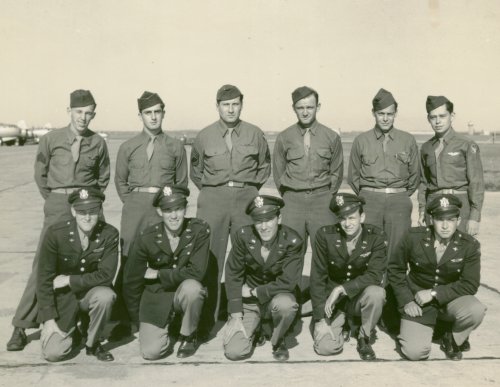
Crew 42, the Hopkins, Crew, probably Stateside before going overseas with the 62nd Bomb Squadron of the 39th Bomb Group (VH). (Courtesy Mr. Richard Kelso, son-in-law of Lt. Col. James H. Thompson, via 39th.org)
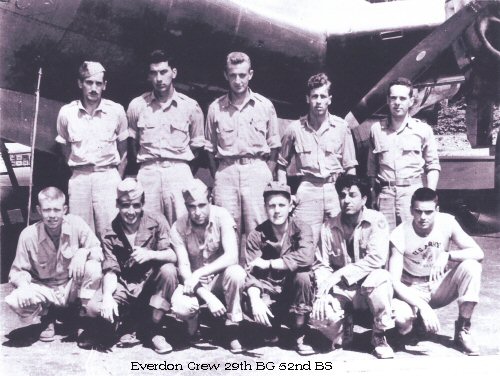
The Everdon Crew, probably at their airfield in the Mariana Islands, with the 52nd Bomb Squadron of the 29th Bomb Group (VH). (Courtesy Mr. Joe Chovelak, 29th BG Historian, via 39th.org)
How it all began ….
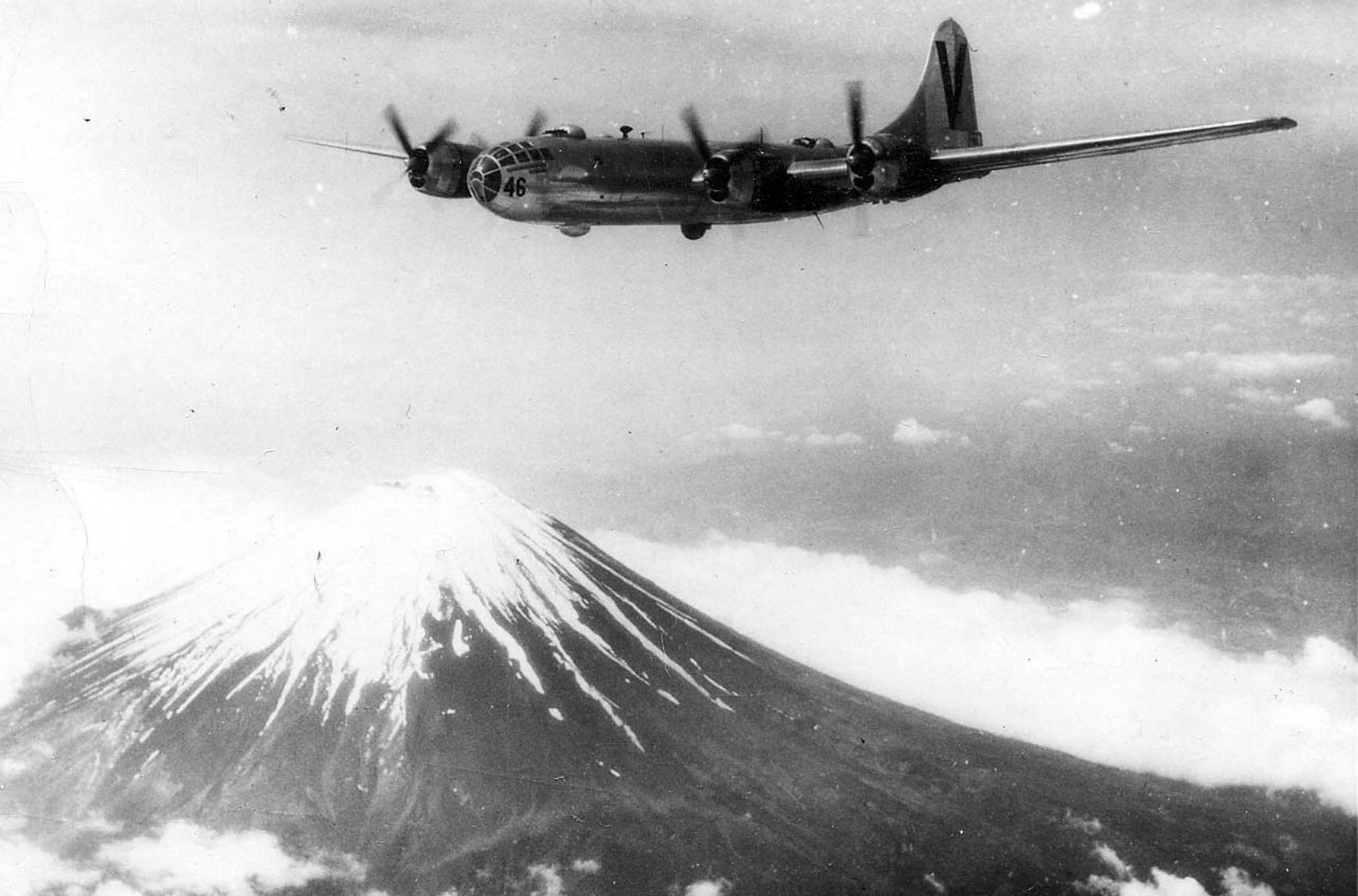
On the night of June 19–20, 1945, 123 airplanes of the 314th Bomb Wing including all of the planes from the 29th and 39th Bomb Groups flying from Guam carried out a devastating air raid on Shizuoka, Japan. Fires swept rapidly through the city, turning much of it into what survivors described as a “sea of fire.” By morning, nearly two-thirds of Shizuoka had been destroyed and approximately 2,000 civilians had lost their lives.
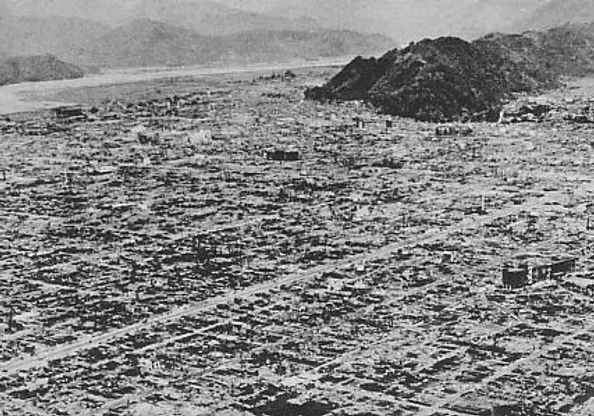
Shizuoka after the raid
During the mission, two B-29 Superfortresses collided in mid-air above Shizuoka. One crashed near Anzai Bridge and the other near Funayama. All 23 airmen aboard the two aircraft lost their lives. Fukumatsu Ito reportedly found two of the airmen still alive, but both later succumbed to their injuries. Amid the scattered wreckage, Ito recovered the remains of several crew members and treated them with dignity and respect.
At a time when Shizuoka was grieving the loss of thousands of its residents, Ito’s compassion toward the American crew required extraordinary courage. Many local families had lost relatives and friends in the bombing, and some viewed the airmen only as enemies responsible for their suffering. Despite the anger and opposition surrounding his actions, Ito chose to treat the fallen Americans with the same dignity as the Japanese victims and arranged for their burial in a communal cemetery alongside local residents.
This marked the beginning of Fukumatsu Ito’s lifelong mission of remembrance and reconciliation.
Ito also discovered a military canteen, blackened by the intense heat of the crash and bearing what appear to be the handprints of an American airman. It would later become known as the Blackened Canteen.
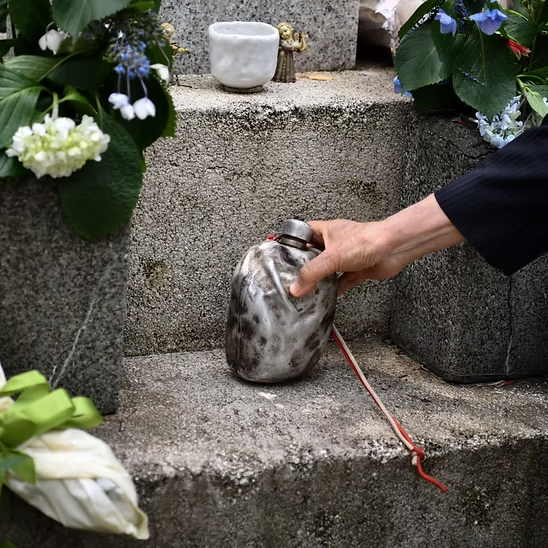
Over time, the canteen became a powerful symbol of remembrance and reconciliation, reflecting Ito’s belief that every life has equal value and that all people—whether friends or former enemies—deserve to be treated with dignity.
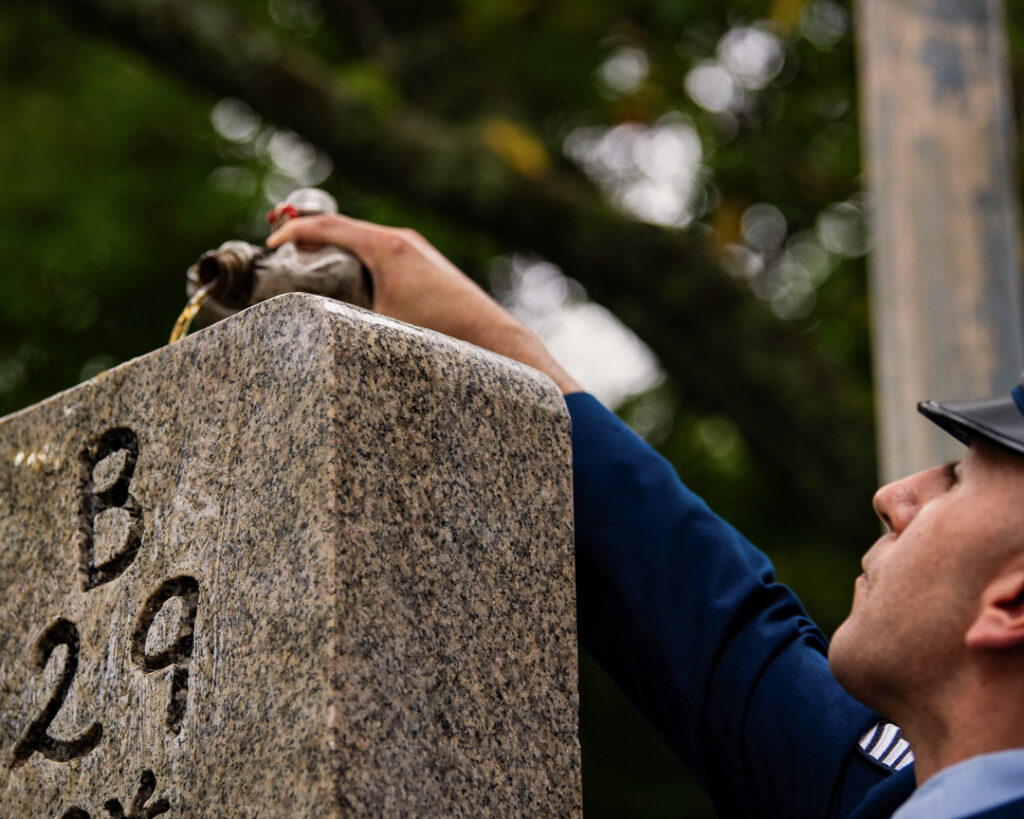
In the years that followed, Ito continued to visit the crash site, pouring bourbon onto the ground as a gesture of remembrance and respect for the fallen airmen.
Determined to ensure that none of the victims would be forgotten, Ito built two memorials on Mount Shizuhata. One honours the people of Shizuoka who died in the bombing and features Kannon, the Buddhist figure of compassion and mercy. The other commemorates the American airmen who lost their lives in the mid-air collision.
Ito’s courageous example later inspired the annual U.S.–Japan Joint Memorial Ceremony, a lasting tradition that honours the victims, brings former enemies together and carries a message of peace to future generations.


Before his passing, Mr. Ito entrusted the Blackened Canteen to Dr. Hiroya Sugano, who has continued the ceremony and preserved its message for future generations.

Each year, during the memorial service, the canteen is filled with Kentucky bourbon. An American participant then pours the whiskey over the memorial honoring the B-29 crew—a symbolic gesture of respect, forgiveness, and friendship between two nations once divided by war.